Coping with life’s Challenges.
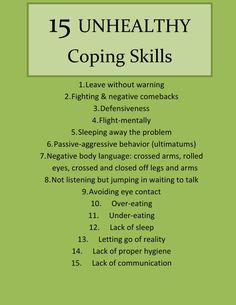
Lets face it, life can be challenging at times, and its how we deal with the difficult times that matter, we need to find ways of coping with the challenges, this is what I call coping mechanisms.

If you need help, book a life coaching session with Derek! Click here to set it up!
Over the years I have had many hard situations to deal with, loss of loved ones, loss of jobs, rejection, the list can go on and on. the real success is when we overcome them, by using positive coping mechanisms.
 We have to look at what do we do now and ask yourself this?
• When under pressure I
……………………….……………………….
……………………………………………………….
stress out and feel like ……………………….
weakness) is ……………………….
……………………..…………. from happening.
I ………………………………………………………..
………………………………………………………..
stops me loving and approving of myself is ……………….
is …………………………………………….
………………………………………………………..
(always / mostly / usually / occasionally)
uncomfortable emotion is feeling ………………….
most is ……………………….
………………………………………………………..
courage!

Taken from Wikipedia.
In psychology, coping means to invest own conscious effort, to solve personal and interpersonal problems, in order to try to master, minimize or tolerate stress and conflict.[1][2][3][4][5]
The psychological coping mechanisms are commonly termed coping strategies or coping skills. The term coping generally refers to adaptive (constructive) coping strategies. That is strategies which reduce stress. In contrast, other coping strategies may be coined as maladaptive, if they increase stress. Maladaptive coping is therefore also described, when looking at the outcome, as non-coping. Furthermore, the term coping generally refers to reactive coping, i.e. the coping response which follows the stressor. This differs from proactive coping, in which a coping response aims to neutralize a future stressor. Subconscious or non-conscious strategies (e.g. defense mechanisms) are generally excluded from the area of coping.
The effectiveness of the coping effort depends on: the type of stress, the individual and the circumstances. Coping responses are partly controlled by personality (habitual traits), but also partly by the social environment, particularly the nature of the stressful environment.

You’ve been in bed for an hour now and you still can’t get to sleep. Maybe you’re thinking about your job or health insurance. Perhaps some problem with your kids has your mind spinning on its late-night hamster wheel of worry. Whatever the issue, you can’t get it out of your head, so you try to solve it then and there. Before you know it, another hour has passed. Now you start fretting about the fact that you can’t get to sleep. “I’ll be a wreck tomorrow,” you tell yourself. “I’ve got to sleep now.” Doesn’t do the trick though, does it?
We’ve all been there. But the good news is, there is something you can do to help―something more effective than the usual advice to “be positive” or just “stop thinking so much.” The latest research on anxiety suggests innovative, even odd, techniques for coping successfully with recurrent worries. I’ve seen these work for hundreds of patients. In fact, I’ve found that most people can get a grip on things if they take a few minutes to develop a different relationship with their thoughts and feelings. Here are 10 approaches to try.
1. Repeat your worry until you’re bored silly. If you had a fear of elevators, you’d get rid of it if you rode in one a thousand times in a row. At first, you would be very anxious, then less so, and eventually it would have no effect (except to make you sick of riding in an elevator). So take the troublesome thought that’s nagging at you and say it over and over, silently, slowly, for 20 minutes. It’s hard to keep your mind on a worry if you repeat it that many times. I call this the “boredom cure” for obvious reasons, but it sure beats feeling overwhelmed by anxiety.
2. Make it worse. When you try too hard to control your anxieties, you only heighten them. Instead, exaggerate them and see what happens. For instance, if you fear that your mind will go blank during a presentation, fake it intentionally in the middle of your next one. Say, “Gee, what was I just saying?” Notice how this makes no difference. It’s nothing to worry about, right? I did this at a lecture once and no one raised an eyebrow. (Perhaps they weren’t listening anyway!)
3. Don’t fight the craziness. You may occasionally have thoughts that lead you to think you’ll do something terrible (“I’m attracted to him. Does that mean I’ll have an affair?”) or that you’re going insane (a client of mine who is an attorney kept imagining herself screaming in court). Remember―our minds are creative. Little synapses are firing away at random, and every now and then a “crazy” thought jumps out. Everyone has them. Instead of judging yours, describe it to yourself like it’s a curious object on a shelf and move on.
4. Recognise false alarms. That fear of your house burning down because you left the iron on has never come true. That rapid heart beat doesn’t mean you’re having a heart attack; it’s your body’s natural response to arousal. Many thoughts and sensations that we interpret as cues for concern―even panic―are just background noise. Think of each of them as a fire engine going to another place. You’ve noticed them; now let them pass by.
5. Turn your anxiety into a movie. You can let go of a worry by disconnecting yourself from it. One way is to imagine that your anxious thoughts are a show. Maybe they’re a little guy in a funny hat who tap dances and sings out your worry while you sit in the audience, eating popcorn, a calm observer.6. Set aside worry time. All too often we take a “Crackberry” approach to our worries: They show up unannounced, like constantly dinging e-mails, and we stop everything to address them―even if we should be doing something else. But what if you don’t respond right away? Try setting aside 20 minutes every day―let’s say at 4:30 p.m.―just for your worries. If you are fretting at 10 a.m., jot down the reason and resolve to think it through later. By the time 4:30 comes around, many of your troubles won’t even matter anymore. And you will have spent almost an entire day anxiety-free.
7. Take your hand off the horn. You constantly check the weather before a big outdoor event. You replay that clumsy comment you made, wishing you could take it back. And, yes, you honk your horn in traffic. When you desperately try to take command of things that can’t be controlled, you’re like the swimmer who panics and slaps at the water, screaming. It gets you nowhere. Instead, imagine that you are floating along on the water with your arms spread out, looking up to the sky. It’s a paradox, but when you surrender to the moment, you actually feel far more in control.
8. Breathe it out. You may notice that when your body is tense, you hold your breath. Focusing on breathing is a common but effective technique for calming the nerves. Where is your breath now, and where is your mind? Bring them together. Listen to the movement of your breath. Does your mind wander somewhere else? Call it back. Concentrate only on breathing in and out, beginning and ending, breath to breath, moment to moment.
9. Make peace with time. When you’re a worrier, everything can feel like an emergency. But notice this about all your anxious arousal: It’s temporary. Every feeling of panic comes to an end, every concern eventually wears itself out, every so-called emergency seems to evaporate. Ask yourself, “How will I feel about this in a week or a month?” This one, too, really will pass.
10. Don’t let your worries stop you from living your life. Many of them will turn out to be false, and the consequences of your anxiety―less sleep, a rapid pulse, a little embarrassment―are just inconveniences when it comes down to it. What can you still do even if you feel anxious? Almost anything.
If you need help, book a life coaching session with Derek! Click here to set it up!
I found these suggestions of coping mechanisms. from your life your voice website
Exercise (running, walking, etc.).
Put on fake tattoos.
Write (poetry, stories, journal).
Scribble/doodle on paper.
Be with other people.
Watch a favorite TV show.
Post on web boards, and answer others’ posts.
Go see a movie.
Do a wordsearch or crossword.
Do schoolwork.
Play a musical instrument.
Sing.
Study the sky.
Punch a punching bag.
Cover yourself with Band-Aids where you want to cut.
Let yourself cry.
Take a nap (only if you are tired).
Take a hot shower or relaxing bath.
Play with a pet.
Go shopping.
Clean something.
Knit or sew.
Read a good book.
Listen to music.
Try some aromatherapy (candle, lotion, room spray).
Meditate.
Go somewhere very public.
Bake cookies.
Alphabetise your CDs/DVDs/books.
Paint or draw.
Rip paper into itty-bitty pieces.
Shoot hoops, kick a ball.
Write a letter or send an email.
Plan your dream room (colours/furniture).
Hug a pillow or stuffed animal.
Hyper-focus on something like a rock, hand, etc.
Dance.
Make hot chocolate, milkshake or smoothie.
Play with modelling clay or Play-Dough.
Build a pillow fort.
Go for a nice, long drive.
Complete something you’ve been putting off.
Draw on yourself with a marker.
Take up a new hobby.
Look up recipes, cook a meal.
Look at pretty things, like flowers or art.
Create or build something.
Pray.
Make a list of blessings in your life.
Read the Bible.
Go to a friend’s house.
Jump on a trampoline.
Watch an old, happy movie.
Contact a hotline/ your therapist.
Talk to someone close to you.
Ride a bicycle.
Feed the ducks, birds, or squirrels.
Colour with Crayons.
Memorise a poem, play, or song.
Stretch.
Search for ridiculous things on the internet.
“Shop” on-line (without buying anything).

Colour-coordinate your wardrobe.
Watch fish.
Make a CD/playlist of your favourite songs.
Play the “15 minute game.” (Avoid something for 15 minutes, when time is up start again.)
Plan your wedding/prom/other event.
Plant some seeds.
Hunt for your perfect home or car on-line.
Try to make as many words out of your full name as possible.
Sort through your photographs.
Play with a balloon.
Give yourself a facial.
Find yourself some toys and play.
Start collecting something.
Play video/computer games.
Clean up trash at your local park.
Perform a random act of kindness for someone.
Text or call an old friend.
Write yourself an “I love you because…” letter.
Look up new words and use them.
Rearrange furniture.
Write a letter to someone that you may never send.
Smile at least five people.
Play with little kids.
Go for a walk (with or without a friend).
Put a puzzle together.
Clean your room /closet.
Try to do handstands, cartwheels, or back bends.
Yoga.
Teach your pet a new trick.
Learn a new language.
Move EVERYTHING in your room to a new spot.
Get together with friends and play Frisbee, soccer or basketball.
Hug a friend or family member.
Search on-line for new songs/artists.
Make a list of goals for the week/month/year/5 years.
Face paint.
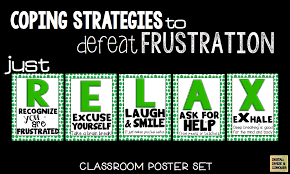
Practice mindfulness and meditated, learn as much as you can, don’t just sit there and be alone.

Build up your emergency care kit and if you need help. feel free to ask, and together we will build up your coping mechanisms and strategies to succeed though life’s challenges.


 People are the heart of our business. We are professional, high performing team players focused on delivering and drawing on our global expertise. We aim to attract, develop and retain the best people, treating each other with honesty, compassion and respect. We create a stimulating, fun and open work culture that promotes personal development and work/life balance, rewards competitively and celebrates success.Innovation Innovation gives us competitive advantage. We promote collaboration and sharing of ideas across our business. We have a structured approach to recognising innovations, rapidly testing ideas and sharing learning. We encourage our people to challenge established practices and achieve continuous improvement. We are committed to delivering thorough and sound solutions to every challenge.Financial Responsibility We expect to receive fair reward for our business performance. We are cost aware and carefully manage our own and our customers’ costs. We manage financial risk systematically and communicate our financial performance in a clear, concise manner. Integrity We are proud of our reputation, built over many years, which depends on us consistently doing the right thing. Integrity is our cornerstone and character is as important as ability. We build trust and act with honesty. We comply with our Business Ethics Policy, management system and all local rules and regulations. We foster a culture of transparency and responsibility. We investigate all violations and complaints and take appropriate action.
 2) Find out where you’re wasting time.